
We can’t really understand God. We can’t truly know Him as He really is. We can only know God by what He shows us – by what He says and what He does. There is a lot of information about Him in the Bible, and there is evidence of His nature all around us in His creation.
The Name of God
Like everybody else, God has a name. God’s name is in Ancient Hebrew and is spelled with four letters: YHWH. Ancient Hebrew didn’t use special characters for vowels – only little marks to tell us how to pronounce the words. The marks associated with God’s name are gone, so there are a couple of ways it could be pronounced. Yah-weh or Jehovah are the ones most nearly correct according to scholars. Both mean the same thing: I AM. They are God’s name and should be treated with reverence and respect. That doesn’t mean we can’t use them – it just means we have to use God’s name appropriately.
Exodus 20:7
You have heard, “You shall not take the name of the LORD (YHWH) thy God in vain (idolatry, evil, uselessness).
It is lawful to use the name of God for all good purposes.
It is lawful to swear by the name of God. This is different than swearing using His name. That is a misuse of His name and is blasphemy.
Leviticus 24:10-23
Now the son of an Israelite mother and an Egyptian father went out among the Israelites, and a fight broke out in the camp between him and an Israelite. The son of the Israelite woman blasphemed the Name with a curse; so, they brought him to Moses. (His mother’s name was Shelomith, the daughter of Dibri of the tribe of Dan.) They cast him in prison (place of temporary confinement – they didn’t confine people in prison as punishment) until the mouth of the Lord should declare to them. The Lord said to Moses: “Take the one who has cursed outside the camp and all those who heard him are to lay their hands on his head and the entire assembly is to stone him. Say to the Israelites: ‘If anyone curses his God, he shall bear the penalty; he who blasphemes the name of the Lord is to be executed. The entire assembly must stone them. Whether foreigner or native-born, if he blasphemes the Name he must be put to death. “‘Anyone who takes the life of a human being is to be put to death. Anyone who takes the life of someone’s animal must make restitution—life for life. Anyone who injures their neighbor is to be injured in the same manner: fracture for fracture, eye for eye, tooth for tooth. The one who has inflicted the injury must suffer the same injury. Whoever kills an animal must make restitution, but whoever kills a human being is to be put to death. You are to have the same law for the foreigner and the native-born. I am the Lord your God.’” Then Moses spoke to the Israelites, and they took the blasphemer outside the camp and stoned him. The Israelites did as the Lord commanded Moses.
We are the only society in the world that routinely blasphemes the name of their own God. The Muslims don’t, Buddhists don’t, Hindus don’t. Why do we use the name of our God as an exclamation point, particularly with other expletives?
If we do, we do it at our own peril. God REALLY doesn’t like people misusing His name or using it in a disrespectful manner.
The Attributes of God
It would be impossible to identify and describe all of the attributes of God. He is by definition infinite, and anything we could understand about His nature must fall into the same category as our ability to understand the nature of the trinity – dubious at best, laughable at worst.
There are, nevertheless, a great many things we can learn about God and how He wants us to live by looking at how He showed Himself to us in His word and in the things He has made. Here are a few of His attributes:
God is masculine

God wants us to refer to Him using the language we use for males. We don’t know why this is, as God cannot be a male in the sense we understand the word. But all of the language in the Bible used to refer to Him is masculine. Jesus referred to Him that way. We need to follow His example. Anybody that tries to make God genderless or female is wrong. God established gender and the relationship between the sexes before time. He understands them. We don’t. To represent God as female is to say that gender doesn’t matter – that for the purposes of the spiritual male and female are the same.
The Bible simply does not support this view. There have been many female leaders in the Bible, including several women who prophesied. There were no female priests, but there are strong indications that women played an important leadership role in the early church. But church leaders are not God. God understands Himself and elected to be referred to as male. We do not and cannot understand the reason for this, but we should be very careful of changing a system He Himself created.
God is eternal (outside of time)
Genesis 1:1-3
In the beginning God created the heavens and the earth. Now the earth was formless and empty, darkness was over the surface of the deep, and the Spirit of God was hovering over the waters. And God said, “Let there be light,” and there was light.
God caused all things to exist, including time. He created a place and filled it with life. Note that the life He filled it with includes both temporal life and a spiritual life that extends outside of time.
Time is irrelevant to God. He sees past, present and future as one unit, the eternal “now,” much like when we hold a history book – we can jump to any point in history we want. God, however, is always aware of the whole of space-time. He can sit with us through our entire life and miss nothing. He can attend to our prayers and manage our histories in the context of all of creation. God does not change, but He can empathize with us and react to the things we do as we do them, even though He knows what is going to happen. This is just like a person reacts to what the characters do in a book they have already read or a movie they have already seen.
God is creator and sustainer of all things
John 1:1
In the beginning was the Word, and the Word was with God, and the Word was God. He was with God in the beginning. Through him all things were made; without him nothing was made that has been made. In him was life, and that life was the light of all mankind.
Acts 17:24-5.
“The God who made the world and everything in it is the Lord of heaven and earth and does not live in temples built by human hands. And he is not served by human hands, as if he needed anything. Rather, he himself gives everyone life and breath and everything else.
God made everything and sustains it. He sustains normal life and spiritual life. Not because He needs it, or us, or anything at all, but because He wants to.
God is spirit
John 4:24.
“God is spirit, and those who worship Him must worship in spirit and truth.”
God has no body as we understand the word. He doesn’t get hungry or irritable. He exists outside of all of creation, so is something totally other than what we know, or are even equipped to know. He IS.
God is holy
Holy is a word we use but seldom define. A thing or being is holy if it is exalted or worthy of complete devotion as one perfect in goodness and righteousness.
God defines this category.
Leviticus 11:44
For I am the LORD your God, so you must consecrate yourselves as holy, and be holy because I am holy.
Isaiah 35:8
And a highway will be there; it will be called the Way of Holiness; it will be for those who walk on that Way. The unclean will not journey on it; wicked fools will not wander about on it.
Matthew 5:48
Be perfect, therefore, as your heavenly Father is perfect.
God conceives of Himself as holy. He requires us to be holy because we are associated with Him. Jesus tells us to be perfect as God is perfect because we are incorporated with Him. We are adopted into the family of God as His children, so we need to fall in on the standards of the family. We have the right to call God “Father”, but we are also reminded of His holiness. A better way to think of this might be to call Him “Father, Sir.”
God is just
Just: honorable or fair, consistent with what is morally right.
God is the definition of being morally right because He is the source of the moral law that all people follow, to greater or lesser extent. A universal moral law requires a moral law-giver above humanity and independent of creation. God is not constrained by His creation, but He never violates His moral law. That is because the moral law is not something He invented, but an expression of His true nature. He does not violate His law because He cannot violate His own nature.
God’s requirement for justice plays an important role in our history. In sinning against Him, we have violated His law. The penalty for this is death. God cannot violate His law to eliminate that penalty, so He had to pay it Himself if He wanted us to survive. This is why Jesus had to die. God had mercy on us by executing the inevitable justice on His son.
Other religious systems have God being merciful at the expense of His justice. They show God compromising Himself to allow our survival. God does not compromise Himself. God must execute justice just like He must be merciful, because it is His nature to do so. The Christian Way is the only system that makes sense out of this dilemma.
Ezekiel 18:29
Yet the Israelites say, ‘The way of the Lord is not just.’ Are my ways unjust, people of Israel? Is it not your ways that are unjust? “Therefore, you Israelites, I will judge each of you according to your own ways, declares the Sovereign Lord. Repent! Turn away from all your offenses; then sin will not be your downfall. Rid yourselves of all the offenses you have committed, and get a new heart and a new spirit. Why will you die, people of Israel? For I take no pleasure in the death of anyone, declares the Sovereign Lord. Repent and live!
Psalm 45:6
Your throne, O God, endures forever; A scepter of uprightness is the scepter of Your kingdom.
Romans 2:6
God will repay every man according to they have done.
God expects us to try to be like Him. He has provided many examples of how we should deal with those around us. Justice, mercy and love are the characteristics of God that He has shown us most clearly, and the ones He has most forcefully directed us to try and use when dealing with each other.
It doesn’t matter what others have done to us. God is just and will judge our behavior according to His standards. He expects us to be just in our dealings with others.
God is all-knowing (omniscient)
Hebrews 4:13
Nothing in all creation is hidden from His sight. Everything is uncovered and laid bare before the eyes of Him to whom we must give account.
Isaiah 55:8-9.
For my thoughts are not your thoughts, neither are your ways my ways,” declares the Lord. “As the heavens are higher than the earth, so are my ways higher than your ways and my thoughts than your thoughts. For as the heavens are higher than the earth, so are my ways higher than your ways, and my thoughts than your thoughts.
Matthew 6:8
And when you pray, do not keep on babbling like pagans, for they think they will be heard because of their many words. Do not be like them, for your Father knows what you need before you ask him.
God knows things we don’t. He knows everything in creation it is possible to know. He also knows everything outside of creation. We can’t hide anything, nor is it possible to fool Him. When we pray, we don’t have to explain anything. He prefers for us to ask in prayer, but He knows. He will put our request in correct relation to our current situation, our future (including eternity), the people involved and their future, and many other possible implications that we can’t see. What may seem like a reasonable request may cause problems later for us or for someone else. We can’t assume that He isn’t listening when we pray because we don’t seem to get an answer, or don’t get the answer we want. Please see Prayer. God is raising children, but not for this world – for the next. We don’t know what that means, but we can trust that He does.
God is everywhere (omnipresent)
Psalms 139:7
Where can I go to escape Your Spirit? Where can I flee from Your presence?
Jeremiah 23:23-24
Am I only a God nearby,” declares the Lord, “and not a God far away? Who can hide in secret places so that I cannot see them?” declares the Lord. “Do not I fill heaven and earth?” declares the Lord.
Matthew 10:29
Are not two sparrows sold for a penny? Yet not one of them will fall to the ground apart from the will of your Father.
Jonah was told to go to the city of Nineveh and preach to the people, but he didn’t want to. He sailed away to try to escape. It didn’t work.
God fills His creation. He knows all of it, sustains all of it, controls all of it. There is nowhere we can be that is separate from Him.
God is all-powerful
God can make His will done. We have to be very careful assuming what that will is. Please see Good and evil.

Psalms 33:6-11
By the word of the Lord the heavens were made,
their starry host by the breath of his mouth.
He piles up the waters of the sea;
He puts the depths into storehouses (reservoirs).
Let all the earth fear the Lord;
let all the people of the world stand stunned before him.
For he spoke, and it came to be;
he commanded, and it stood firm.
The Lord foils the plans of the nations;
he thwarts the plans of the peoples.
But the counsel of the Lord stands,
the purposes of his heart to all generations.
Romans 8:28
And we know that God makes all things work together, for the good of those who love Him who are appointed according to His purpose.
God accomplishes what He wants and uses what we do to that end. But what does He want? He is trying to raise children as well as plan for eternity. You could force a child to do something, but it is much harder to train him to want to do what is right simply because it is right. God is trying to train us up into beings sharing all of His attributes (although to a lesser extent). We don’t know what that involves, so we just have to trust that He is doing it in the way that it is best done. This apparently involves limiting the use of His power – not because He has to, but because it furthers His purpose in the best way possible. Everything He does is in support of His final goals. We don’t know what those are, much less the best way of accomplishing them. Trust that God knows what He is doing.
God is sovereign
According to the American Heritage Dictionary, a sovereign is: One that exercises supreme, permanent authority. That definition completely applies to God.
1 Chronicles 29:11
Yours, Lord, is the greatness and the power and the glory and the splendor and the majesty, for everything in heaven and earth is yours. Yours, Lord, is the kingdom; you are exalted as head over all.
Romans 1:1
Paul, a slave of Christ Jesus, appointed an apostle and set apart for the gospel of God – the gospel he promised beforehand through his prophets in the Holy Scriptures regarding his Son, who as to his earthly life was a descendant of David, and who through the Spirit of holiness was appointed the Son of God in power by his resurrection from the dead: Jesus Christ our Lord (kyriou – lord or master; supreme in authority).
Luke 17:7-10
“Which of you whose servant comes in from plowing or shepherding in the field will say to him, ‘Come at once and sit down to eat’? Won’t he rather say, ‘Prepare my meal and dress yourself to serve me while I eat and drink; after that you may eat and drink’? Does he thank the servant because he did what he was told to do? So you also, when you have done everything you were told to do, should say, ‘We are unworthy servants; we have only done our duty.’”
God rules creation because He made it, and can do what He wants with His own creation. We have to do what He says. We don’t earn favor for doing so. We have nothing to be proud of. There is no bonus, extra award or special present for doing our duty – we are doing what is expected. The best reward we should expect is for God to tell us at the judgement, “Well done, good and faithful servant.” In the parable of the servants and the talents (Matthew 25:14-28), the servant who hid his bag of gold in the ground was thrown outside into the darkness, where there will be weeping and gnashing of teeth. God is completely correct to do so. He created us to serve Him. He loves us as children, but our created purpose is service. If we refuse to serve Him, we are refusing our created purpose. This is rebellion, the original sin. We have therefore not repented of our sin and can expect no forgiveness.
We are also happiest when we do what He wants us to do. We are designed to fill specific roles. When we fulfill those roles, we live in the way best suited to who and what we are. We find that we are more contented, more fulfilled and find the most peace when we do. God has to beat us into submission then force us to do what He wants us to do. Once we start doing it, we suddenly realize He was right all along and gladly continue to do so. Thanks be to God that He has the patience to help us this way rather than destroy us for our arrogant refusal do to what is actually in our own best interest.
God is arbitrary
Romans 9:10-15
Not only that, but Rebekah’s children were conceived at the same time by our father Isaac. Yet, before the twins were born or had done anything good or bad—in order that God’s purpose in election might stand: not by works but by him who calls—she was told, “The older will serve the younger.” Just as it is written: “Jacob I loved, but Esau I hated.” What then shall we say? Is God unjust? Not at all! For he says to Moses, “I will have mercy on whom I have mercy, and I will have compassion on whom I have compassion.”

God chooses some, but not others. Some, like Paul get struck down by Him and rather forcibly shown the light. Others are left to drift through life worshiping and serving themselves. Some are chosen for salvation and some are not. This is not fair as we understand the word, but remember that God uses a completely different set of information when He is deciding how to act. Fair as we understand it does not and cannot apply.
One possibility is that God understands who can be saved and who is too badly damaged by original sin. Consider a surgeon doing triage after a disaster like a train wreck. He goes through the wounded deciding who to save first because they have the best chance or need help the fastest, who can wait their turn and who is beyond help. This is possibly closer to how God deals with us when deciding our eternal fate. Some people are salvageable and some are not. Some of it clearly has to do with how willing we are to submit to Him. I’m guessing, because I don’t really know. I can’t. None of us can. It is not for us to criticize or second-guess His actions, because we don’t have enough information to do so.
The best thing we can do if we are concerned about those who may not be saved is to tell them about Jesus and give them the best chance possible under the circumstances. Complaining that God isn’t fair won’t do anything at all except drive yourself away from Him.
God is arbitrary but not capricious. Capricious gods like the gods of the Greeks act on emotional whims. They are not consistent. God is arbitrary, but consistent. He is clearly referring to guidelines within Himself that He follows when He makes these decisions. We can’t question them because we don’t know what they are. Even if we understood those guidelines, we wouldn’t have the right to criticize them because we are creatures and He is the creator. We can, however rest easy in the knowledge that He is just and loving, and will not destroy anyone or anything that He has made without a good reason.
God is good
God’s actions are always right and true. It is usually said that God is good, but we have to remember that this does not mean that He conforms to an external standard of good – He is the standard of good. For a full examination of good, bad and evil, please see Good and evil.
Luke 18:18-25
A certain ruler asked him, “Good teacher, what must I do to inherit eternal life?” “Why are you calling me good?” Jesus answered. “No one is good—except God alone. You know the commandments: ‘You shall not commit adultery, you shall not murder, you shall not steal, you shall not give false testimony, honor your father and mother.’” “All these I have kept since I was a boy,” he said. When Jesus heard this, he said to him, “You still lack one thing. Sell everything you have and give to the poor, and you will have treasure in heaven. Then come, follow me.” When he heard this, he became very sad, because he was very wealthy. Jesus looked at him and said, “How hard it is for the rich to enter the kingdom of God! Indeed, it is easier for a camel to go through the eye of a needle than for someone who is rich to enter the kingdom of God.”
Romans 8:28
And we know that God makes all things work together, for the good of those who love Him who are appointed according to His purpose.
God has no evil in Him, His intentions and motivations are always to a beneficial or positive outcome. He always does what is right. Note that ‘good’ does not always mean happy or pleasant. Doing good for a child includes discipline and punishment. Please also note that good as defined by God does not match good as defined by Man. God also turns the evil that men do to good. He does not stop men from doing evil, but uses the evil to accomplish His good.
God gave us the law to show us what good behavior is, but God just doesn’t want us to do good, He also wants us to be good. We need to purge ourselves of evil to the best of our ability, including our actions, habits and thoughts. We can’t do it, but we have to try. We also have to recognize that it won’t be enough to save us.
God is loving
In English, love is a vague word with lots of meanings. Greek has a lot of very specific words for love. This helps understand what the authors of the Bible meant in various places. The authors of the New Testament wrote in Greek, but they were not Greeks. Greek was a second or third language for them. They wrote in Greek for the same reason most people wrote in Latin in the Middle Ages and French in the 1800s. They were the languages of literacy at the time. They wrote in those languages because that way they knew they would be understood by the greatest number of people. This means that their use of language was sometimes a little odd or imprecise. Each author was self-consistent, however, so it is usually not difficult to determine what they actually meant.
There are a LOT of Greek words for love, each with its own shade of meaning. The list below shows some of those words with their formal meanings. When looking at Scripture, you have to look at the whole context to find out what the author was trying to say.
Agape – Love, goodwill, properly, love which centers in moral preference; a matter of judgement and choice; unearned, undeserved
Philein – to love; more of attachment and peculiar personal affection, usually between equals.
Philadelphia – brotherly love
Eros – love, mostly of the sexual passion, but can also be more abstract appreciation of beauty.
Storge – familial love, especially between parents and children.
Philanthropia – love for mankind
Most of the time, we can just use the English word ‘love’ and look for fine distinctions in the context.
People have written a huge number of books talking about God’s love. The bottom line is that God loves us with the very essence of love. His love is reasoned, not based on our intrinsic value or worthiness (we have neither). It is permanent and unchanging. Most of the commands in the New Testament deal with our need to love each other or deal with each other in love.
Matthew 22:34-40
Hearing that Jesus had silenced the Sadducees, the Pharisees got together. One of them, an expert in the law, tested him with this question: “Teacher, which is the greatest commandment in the Law?” Jesus replied: “‘Love the Lord your God with all your heart and with all your soul and with all your mind.’ This is the principal and greatest commandment. And the second is like it: ‘Love your neighbor as yourself.’ All the Law and the Prophets hang on these two commandments.” (note that this also involves loving yourself)
1 Corinthians 13:1-13 (The church in Corinth was stuck on their spiritual gifts, to the point where it became a competition – divisive rather than uniting.)
If I speak in the tongues of men or of angels, but do not have love, I am only a resounding gong or a clanging cymbal. If I have the gift of prophecy and know all mysteries and all knowledge, and if I have absolute faith so as to move mountains, but do not have love, I am nothing. If I give all I possess to the poor and exult in the surrender of my body (abuse or martyrdom) but do not have love, I gain nothing. Love is patient, love serves others and is gentle). It is not jealous, it does not boast, it is not proud. It is not rude, it is not self-seeking, it is not easily angered, it keeps no record of wrongs. Love takes no pleasure in evil but rejoices in the truth. It endures patiently, has complete faith, is completely confident, always perseveres. Love never fails. But where there are prophecies, they will cease; where there are tongues, they will be stilled; where there is knowledge, it will pass away. For we know in part and we prophesy in part, but when the perfect comes, the partial passes away. When I was a child, I talked like a child, I thought like a child, I reasoned like a child. When I became a man, I put the ways of childhood behind me. For now we see only a blurred reflection as in a mirror; then we shall see face to face. Now I know in part; then I shall know fully, even as I am fully known. So these three remain: faith, hope and love. But the greatest of these is love.
The object of God’s love is first and foremost His own Son, Jesus Christ.
Matthew 3:17
And a voice from heaven said, “This is My beloved Son, in whom I am well pleased!”.
Those who are united by faith and love to Jesus Christ are, in a different sense from those who are not thus united, the special objects of God’s love.
1 John 4:16
We have come to know and rely on the love that God has for us. God is love, and the person who abides in love abides in God, and God abides in him.
John 15:9-17 (Jesus is speaking)
“As the Father has loved me, so have I loved you. Remain in my love. If you keep my commands, you will remain in my love, just as I have kept my Father’s commands and remain in his love. I have told you this so that my joy may be in you and that your joy may be complete. This is my commandment, that you love each other as I have loved you. Greater love has no one than this: to lay down one’s life for one’s friends. You are my friends if you do what I command. I no longer call you slaves, because a slave does not understand what his master is doing. But I have called you friends, for everything that I learned from my Father I have made known to you. You did not choose me, but I chose you and appointed you so that you might go and bear fruit—fruit that will last—and so that whatever you ask in my name the Father will give you. This is my command: Love each other.
John 21:15-17 (after the resurrection)
When they had finished eating, Jesus said to Simon Peter, “Simon son of John, do you love (agape) me more than these?” “Yes, Lord,” he said, “you know that I love (philo) you.” Jesus said, “Feed my lambs.” Again Jesus said, “Simon son of John, do you love (agape) me?” He answered, “Yes, Lord, you know that I love (philo) you.” Jesus said, “Take care of my sheep.” The third time he said to him, “Simon son of John, do you love (philo) me?” Peter was hurt because Jesus asked him the third time, “Do you love (philo) me?” He said, “Lord, you know all things; you know that I love (philo) you.” Jesus said, “Feed my sheep.”
It is easy to read too much into the use of the words in this text. There are three statements of love to offset Peter’s three denials the night before Jesus’ crucifixion. “Do you choose to love me, as a deep, committed moral choice based on your judgement of who and what I am?” vs “I love you dearly as a friend, pal, comrade.” We need both. We need to love and trust Jesus as a conscious choice, but also as an emotional tie to our dearest friend and savior. The problem is that feelings come and go, but the deep committed decisive love of agape is something that we can sustain even in the depths of depression and hopelessness. (Not despair – despair is giving up on God; that is a decision, not a feeling).
There is a significant difference between love and affection. Affection is not a cause of lasting happiness. Affection is very demanding. Left to its natural course, affection can become greedy, insistently helpful, jealous, exacting and fretful. It is unhappy when its object is absent, but is not repaid by much enjoyment when its object is present. There is a continuous demand for reciprocation, sympathy, appreciation. Affection is very similar to kindness – the type of kindness that will kill an animal so it doesn’t have to suffer.
Then there is the greed to be loved. Our world is a hurtful, hateful place because we have made it that way. Many, many people grow up starved for love. Once they find someone who loves them, or often someone who is just nice to them, they latch on to them and refuse to let go. They become jealous and possessive. The greed to be loved is a fearful thing. Some of those who say that they live for love come to live in incessant resentment. We must pray for these people and help them realize that they don’t need to rely on people to love them, that God’s love is infinitely greater. That is a hard thing, though that we can’t accomplish. God must do it. Be very, very careful in dealing with them because they are fragile.
God loves Jesus first and foremost. If we remain in Him, He will love us with the same kind of love. He said He will lay down His life for us if we are His friends. He laid down His life. To claim that, we must be His friends, living the way He wants us to live and keeping His commandments.
John 15:13-14
Greater love has no one than this: to lay down one’s life for one’s friends. You are my friends if you do what I command.
Love is the essence of God’s interaction with us. It is the essence of how He expects us to deal with Him and with each other. It also means we have to love ourselves with the same kind of love, and neither gloss over our problems nor beat ourselves up over our failures. God loves me enough to continue to beat me until I turn to Him, in order to make me into what He created me to be – whether I like it or not (and I probably won’t). If He loves me that much, I should love me too.
The love God has for us is not a passing feeling, but a chosen affection that lasts the ages. He continues to love us in spite of our constant failures, rebellions and disappointments. This is the same sense in which He wants us to love one another, ourselves and, indeed, our enemies – wanting the ultimate good for the person, even if that means short-term unpleasantness or pain, like having someone arrested or committed to a rehab center.
We must be careful not to fall into a great temptation that comes with love – loving AT someone. Loving someone in self-righteousness, browbeating them or manipulating them to be what you want them to be is not love. Intentionally hurting someone or gleefully telling someone unpleasant truths “in love” is not love. Love seeks to guard, guide and protect someone, even at your own expense. Love tries to help someone help themselves, even if that makes things harder or take longer. Love continues to care for and support a person even when they make decisions you don’t agree with that lead to their own destruction. Love may cause you to abandon them to the results of their decisions, but always in the hope that they will see the error of their ways and repent – always in sorrow, always with joy when they return. This is the love God has for us. This is the love He expects us to have for each other, to the best of our ability.
God is merciful
There is a common misconception that the God of the Old Testament is a God of fire and judgement, but the God of the New Testament is mercy and love. People who say this have not read the Bible with attention. In reality, God is God, and He doesn’t change between the two. The Old Testament is full of instances when God ‘relents’ or ‘forgives’. He overlooks much in His stubborn and rebellious children when they return to Him.
Exodus 32 11-14
But Moses sought the favor of the Lord his God. “Lord,” he said, “why should your anger burn against your people, whom you brought out of Egypt with great power and a mighty hand? Why should the Egyptians say, ‘It was with evil intent that he brought them out, to kill them in the mountains and to wipe them off the face of the earth’? Turn from your fierce anger; relent and do not bring disaster on your people. Remember your servants Abraham, Isaac and Israel, to whom you swore by your own self: ‘I will make your descendants as numerous as the stars in the sky and I will give your descendants all this land I promised them, and it will be their inheritance forever.’” Then the Lord relented and did not bring on His people the disaster He had threatened.
Jeremiah 26:13
Now reform your ways and your actions and obey the voice of the Lord your God so that He might relent of the disaster He has pronounced against you.
Isaiah 55:7
Let the wicked forsake their ways and the unrighteous their thoughts. Let them turn to the Lord, and he will have mercy on them, and to our God, for he will freely pardon.
Isaiah 42:3 (speaking of Jesus)
“Here is my servant, whom I uphold, my chosen one in whom I delight; I will put my Spirit on him, and He will bring justice to the nations. He will not shout or cry out, or raise His voice in the streets. A bruised reed shall he not break, and the smoking flax shall he not quench.
Mercy includes both love and forgiveness. If God didn’t love His people, He would not forgive them their crimes against Him and there would be no mercy. There are many instances in which God shows mercy. The most glaringly visible example is when, in His love, God showed mercy to us by executing His inflexible judgment on His Son instead of causing us to be destroyed.
Mercy does not eliminate the consequences of sin, but it mitigates the punishment. When a child does something wrong, it would be foolish to fail to punish him just because he said he was sorry and had learned his lesson. We still have to teach him hard lessons, otherwise he won’t learn and grow into the man he needs to become. When dealing with other adults, though, we are not trying to teach them a lesson (except those in specific positions of authority). We are trying to deal with each other through the trials of life. This is where God wants us to deal most with each other in love and mercy. Maybe a person has earned harsh treatment. Following God’s merciful example, be merciful and forgive instead. That doesn’t mean give them a lecture and assume they owe you a debt. Simply forgive, then forget about it to the best of your ability. Try and kill any lingering resentment.
This is the mercy God wants us to show to others.
God does not lie
Numbers 23:19
God is not a man, that he should lie or a son of man, that he should change His mind; does He speak and not act? Does He promise and not fulfill?
Titus 1:1-3
Paul, a servant of God and an ambassador of Jesus Christ in service of the faith of God’s elect and their acknowledgement of the truth that leads to godliness — in the confidence of eternal life, which God, who does not lie, promised before the beginning of time; in His own time He has revealed His word in the proclamation entrusted to me by the command of God our savior.
God does not lie. He is not deceptive, nor present a misleading appearance. If it looks like He does, we have misunderstood something. An example of this is the idea that the world is only 6,000 years old. Given vast amount of information we have about the immense age of the earth, this position is untenable. God does not lie. We may not correctly understand geologic or evolutionary evidence, but we cannot pretend that God set things up to intentionally deceive us. We trust in a God that is quite powerful enough to accomplish things in ways we don’t understand. We just have to trust Him and not get excited about things we don’t immediately (or even eventually) understand.
His intentions, methods and timeline are not ours. He brings His words to fruition at the correct time, in the correct way, not simply and immediately like we would want.
God is involved
God is deeply interested in each one of us. He avidly follows every instant of our lives from His vantage point outside of time. He is individually teaching, coaching and mentoring each one of us to become what He wants us to be.
Matthew 6:25-34
“Therefore I tell you, do not worry about your life, what you will eat or drink; or about your body, what you will wear. Is not life more than food, and the body more than clothes? Look carefully at the birds of the air; they do not sow or harvest or gather into barns, and yet your heavenly Father feeds them. Are you not much more surpassingly excellent than they? Who among you by worrying can add a single hour to his lifespan? “And why do you worry about clothes? Consider how the lilies of the field grow. They do not labor or spin. Yet I tell you that not even Solomon in all his glory was adorned like one of these. If that is how God clothes the vegetation of the field, which is here today and tomorrow is thrown into the furnace, will he not much more clothe you—you who lack confidence? Therefore do not worry, saying, ‘What shall we eat?’ or ‘What shall we drink?’ or ‘What shall we wear?’ For the pagans (ethne – foreign tribes) strive after all these things, and your heavenly Father knows that you need them. But seek primarily the kingdom of God and his righteousness, and all these things will be given to you. Therefore do not worry about tomorrow, for tomorrow will worry about itself. Each day has enough trouble of its own.
Acts 17:24-5
And he is not served by human hands, as if he needed anything. Rather, he himself gives everyone life and breath and everything else.
Psalms 104:27-29
All creatures look to you to give them their food at the proper time. When you give it to them, they gather it up; when you open your hand, they are satisfied with good things. When you hide your face, they panic; when you take away their breath, they die and return to the dust.
Mark 10:25
It is easier for a camel to go through the eye of a needle than for someone who is rich to enter the kingdom of God
God sustains us and provides for us. When we trust Him, He will provide and in abundance. He may decide to take blessings away if we start to rely on what He has provided rather than in the fact of His provision. Nevertheless, we are not to worry about living life. He wants us to ask Him daily to provide for our needs, and He will give us each day what we need – no less and no more.
He wants us to talk to Him and involve Him in every smallest detail of our lives.
The Trinity
God is one God, but is also a Trinity. The Trinity consists of one God with three persons: Father, Son and Holy Spirit. God is in one sense ‘one’ and in another sense ‘three.’ This is actually impossible for us to understand, let alone explain. In any case, a lot of people have gotten themselves into trouble throughout history trying to explain it. The incomprehensibility of the nature of God actually makes sense. God is outside of the created universe, so corresponds to nothing we know. It would be considerably more surprising if we did know the nature of God. That would indicate that the God we believe in is actually a human construct.

Since we don’t understand much about what God has revealed about Himself, we can be more confident that we are dealing with someone outside of time and space who is beyond our comprehension. It makes it far more likely that He is the real thing.
The fact that God is one and at the same time more than one is clearly stated by Jesus (who ought to know).
Matthew 20:19.
Go ye therefore, and teach all nations, baptizing them in the name of the Father, and of the Son, and of the Holy Spirit.
The Father
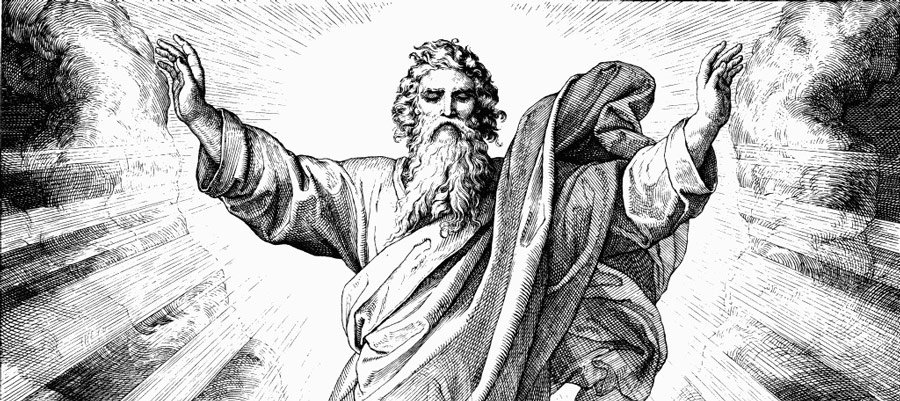
In relation to God, the Father seems to be in charge – He is the Chief Executive. The other Persons do what He says. The Father set the date of Jesus’ return and withheld the information from Him.
Mark 13:32
“But about that day or hour no one knows, not even the angels in heaven, nor the Son, but only the Father.”
In the Garden of Gethsemane, Jesus submitted to Him to the point of delivering Himself up to death by slow torture and the fracturing of the Godhead.
Matthew 26:36-39
Then Jesus went with his disciples to a place called Gethsemane, and he said to them, “Sit here while I go over there and pray.” He took Peter and the two sons of Zebedee along with him, and he began to be sorrowful and deeply distressed. Then he said to them, “My soul is overwhelmed with sorrow to the point of death. Stay here and keep watch with me.” Going a little farther, he fell with his face to the ground and prayed, “My Father, if it is possible, avert this cup from me. Yet not as I will, but as you will.”
This is not to say that the Son and the Spirit are lesser beings or subordinate to the Father in any sense other than being directed to act. Jesus and the Spirit are of one substance with the Father.
The Father is the source of all creation, which He exercised through Jesus.
John 1:1-3
In the beginning was the Word, and the Word was with God, and the Word was God. He was with God in the beginning. Through him all things were made; without him nothing was made that has been made.
The Father has established Jesus as the ruler of creation and elevated Him above all else.
Luke 10:22
“All things have been committed to me by my Father. No one knows who the Son is except the Father, and no one knows who the Father is except the Son and those to whom the Son chooses to reveal him.”
Philippians 2:5-11
Therefore God elevated Him to the highest place and gave him the name that is above every name, that at the name of Jesus every knee should bow, in heaven and on earth and under the earth, and every tongue acknowledge that Jesus Christ is Lord, to the glory of God the Father.
The Father has chosen who will be saved and given them to the Son.
John 6:37-40
All those the Father gives me will come to me, and whoever comes to me I will never cast out. For I have come down from heaven not to do my will but to do the will of him who sent me. And this is the will of him who sent me, that I shall lose none of all those he has given me, but raise them up (from the dead, not elevate or exalt) at the last day. For my Father’s will is that everyone who looks to the Son and believes in him shall have eternal life, and I will raise them up at the last day.”
The Father is the one who sustains all of creation. He provides everything we need.
Matthew 6:31-33
So do not worry, saying, ‘What shall we eat?’ or ‘What shall we drink?’ or ‘What shall we wear?’ For the pagans run after all these things, and your heavenly Father knows that you need them. But seek first his kingdom and his righteousness, and all these things will be given to you as well.
He is the one who made us to be more valuable than the creatures of the earth. He can destroy both soul and body in hell, but loves us so much He knows the very number of our days and the hairs on our head.
Matthew 10:29-30
Do not be afraid of those who kill the body but cannot kill the soul. Rather, be afraid of the One who can destroy both soul and body in hell. Are not two sparrows sold for a penny? Yet not one of them will fall to the ground outside your Father’s care. And even the very hairs of your head are all numbered. So don’t be afraid; you are worth more than many sparrows.
It is to the Father that we should pray.
Matthew 6:9
But when you pray, go into your room, close the door and pray to your Father, who is unseen. Then your Father, who sees what is done in secret, will reward you.
It the Father that is offended when we sin. The Father executed His justice on His Son to save us in His mercy. We ask for forgiveness from Him for the sake of Jesus. Jesus has the authority to forgive sins on behalf of the Father.
Matthew 6:15
But if you do not forgive others their sins, your Father will not forgive your sins.
The Father established the law to show us how we should live. His will is the standard to which we will be held at judgment.
Matthew 7:21
“Not everyone who says to me, ‘Lord, Lord,’ will enter the kingdom of heaven, but only the one who does the will of my Father who is in heaven.
The Son
The Son is the Chief Operations Officer in the Trinity.

Did He exist? Absolutely. Jesus’ existence is one of the best-attested facts in early history. Roman records show that He was crucified. Jewish commentaries from Jesus’ time mention Jesus, His miracles and crucifixion. They note that the followers of ‘the Way’ could not be stamped out. If they had Jesus’ body, both the Jews and the Romans would have shown Jesus up as a fraud and eliminated the church, because He and His followers were a major disruption.
The Quran notes Jesus’ virgin birth, His miracles and that He rose from the dead. Roman historians mention Him. The earliest copies of parts of the New Testament date to within 150 years of His death. The internal evidence of the Bible shows that He rose from the dead. Why else would the disciples change from hiding in their houses to preaching in the streets within three days? These were not particularly brave men until after the resurrection. People have been trying to disprove this for 2,000 years and can’t.
Jesus is God.
John 1:1.
In the beginning was the Word, and the Word was with God, and the Word was God.
Jesus is the Son of God.
Luke 1:35
The Holy Spirit shall come upon you, and the power of the Most High will overshadow you. So the Holy One to be born will be called the Son of God.
John 5:17-18
Jesus said to them, “My Father is always at his work to this very day, and I too am working.” For this reason they tried all the more to kill him; not only was he breaking the Sabbath, but he was even calling God his own Father, making himself equal with God.
Jesus called Himself the Messiah.
The Messiah would be the savior of Israel who would deliver them from captivity. The Jews of Jesus’ day were expecting a military leader that would free them from the yoke of Rome. Instead, Jesus came to free them from the bondage to sin.
John 4:25-26
The woman said, “I know that Messiah” (called Christ) “is coming. When he comes, he will explain everything to us.” Then Jesus declared, “I, the one speaking to you—I am he.”
Jesus is our representative before the Father.
Matthew 10:32-33
“Whoever acknowledges me before others, I will also acknowledge before my Father in heaven. But whoever disowns me before others, I will disown before my Father in heaven.
Hebrews 4:14
Therefore, since we have a great high priest who has ascended into heaven, Jesus the Son of God, let us hold firmly to the faith we profess.
Jesus was a man.
John 1:14
The Word was made flesh, and dwelt among us.
Jesus created everything.
John 1:1-3
In the beginning was the Word, and the Word was with God, and the Word was God. He was with God in the beginning. Through him all things were made; without him nothing was made that has been made.
Colossians 1:16
For in Him all things were created, things in heaven and on earth, visible and invisible, whether thrones or dominions or rulers or authorities. All things were created through Him and for Him.
Jesus is our king.
Luke 1:33.
And he shall reign over the house of Jacob forever; and of his kingdom there shall be no end.
Jesus is our savior.
Acts 4:12.
Neither is there salvation in any other: for there is none other name under heaven given among men, whereby we must be saved.
Jesus is our substitute in the Father’s judgment.
He took our place as the focus of God’s wrath for our disobedience.
1 Peter 1:18-19.
For you know that it was not with perishable things such as silver or gold that you were redeemed from the empty way of life you inherited from your forefathers, but with the precious blood of Christ, a lamb without blemish and spotless.
Jesus will be our judge at the end of time.
2 Corinthians 5:10
We must all appear before the judgment seat of Christ; that every one may receive his due for the things done in the body, whether good or bad.
John 12:48.
The Word that I have spoken, the same shall judge him in the last day.
John 5:26-27
For as the Father has life in himself, so he has granted the Son to have life in himself. And he has given him authority to execute judgment because he is the Son of Man.

The Holy Spirit
The Holy Spirit is not well-described in Scripture. He has been involved in our story from creation to last judgment. He is best known by His acts. He seems to function as Chief Information Officer in the Trinity.
He is God.
Romans 8:9
You, however, are not in the realm of the flesh but are in the realm of the Spirit, if indeed the Spirit of God lives in you.
He proceeds from the Father and the Son.
John 14:26.
But the advocate, the Holy Ghost, who the Father will send in my name, will teach you all things, and remind you of everything I have said unto you.
He participated in creation.
Genesis 1:2
Now the earth was formless and empty, darkness was over the surface of the deep, and the Spirit of God was hovering over the waters.
He is a comforter.
‘Comforter’ in this case means something different than we tend to mean today. To comfort is earlier times was to help or strengthen someone rather than to make them feel better. The Spirit helps us and strengthens us to face the trials of life.
He provides God’s power.
He also enables to things they couldn’t otherwise do.
1 Corinthians 12:7-11
Now to each one the manifestation of the Spirit is given for the common good. To one there is given through the Spirit a message of wisdom, to another a message of knowledge by means of the same Spirit, to another faith by the same Spirit, to another gifts of healing by that one Spirit, to another miraculous powers, to another prophecy, to another distinguishing between spirits, to another speaking in different kinds of tongues, and to still another the interpretation of tongues. All these are the work of one and the same Spirit, and he distributes them to each one, just as he determines.

Acts 2:4-6
All of them were filled with the Holy Spirit and began to speak in other tongues a as the Spirit enabled them. Now there were staying in Jerusalem God-fearing Jews from every nation under heaven. When they heard this sound, a crowd came together in bewilderment, because each one heard their own language being spoken.
The Holy Spirit helps us hear and understand God.
2 Peter 1:21
For prophecy never had its origin in the human will, but prophets, though human, spoke from God as they were carried along by the Holy Spirit.
He communicates the Father’s will through people.
Acts 2:18
Even on my servants, both men and women, I will pour out my Spirit in those days, and they will prophesy.
He is part of salvation.
John 3:5
Jesus answered, truly truly, I say to you, unless a man is born of water and of the Spirit, he cannot enter into the kingdom of God.
He intercedes with God for us.
Romans 8:26-7
In the same way, the Spirit holds us together in our weakness. We do not know how we ought to pray, but the Spirit himself intercedes for us with groans too deep for words. And he who searches our hearts knows the mind of the Spirit, because the Spirit intercedes for God’s people according to the will of God.
He shows us the truth of things.
John 16:13
When he, the Spirit of truth, is come, he will guide you into all truth.
The Holy Spirit is the Person of God that dwells within us, helping rebuild us into what God wants us to be. He sanctifies us, which is to say that He works to perfect us and make us holy.
Philippians 1:6.
He which began a good work in you will perfect it until the day of Jesus Christ.
The Holy Spirit is the least known of the Persons of the Trinity, but seems to do the most in our lives to help us, guide us, protect us and perfect us.
So who is God?
God is one being with three persons. He created and sustains everything. This means He owns it and can rightly do with it exactly as He pleases. He created us to be His servants and is our king. He is loving, just and merciful, and He is, above all, consistent.
He is worthy of worship and obedience.